There is no single right answer to how often a warehouse should run a rack audit. The useful answer is a schedule: count the bins that cause the most trouble most often, count slow, low-value stock less often, and add extra counts around peaks, incidents and client disputes.
A note on terms: in this article a rack audit means a stock count of what is on each rack bin, checked against your system records. It is not a structural rack-safety inspection. Checking uprights, beams and connectors for damage is a separate obligation, and its frequency should follow the rack manufacturer’s guidance and the applicable safety standard.
Three ways to audit stock on racks
Full physical count
A wall-to-wall count checks every bin in one event. It gives a clean baseline but usually stops picking and receiving, so most sites run it rarely and errors build up for months unseen.
Cycle counting
Cycle counting checks a small slice of locations every day or week, covering the whole warehouse over a planned period without shutting down. Because errors are found close to when they happen, the cause (a mis-pick, a wrong putaway, unrecorded damage) is easier to trace.
Continuous or camera-based audits
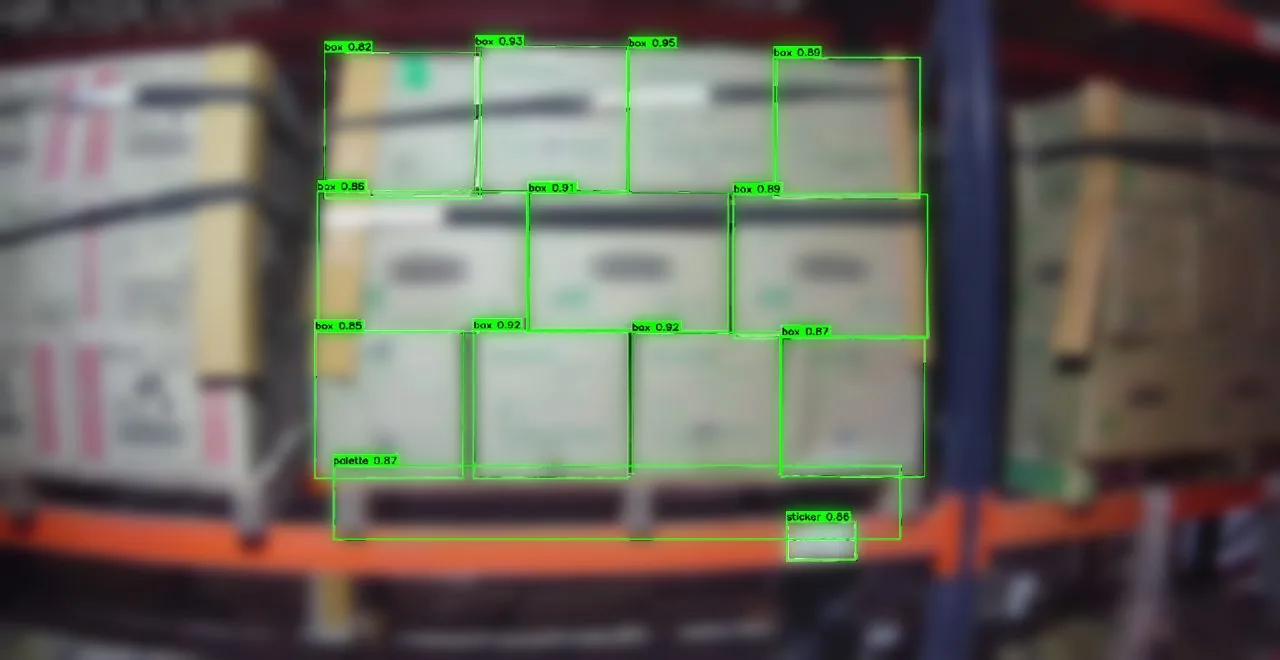
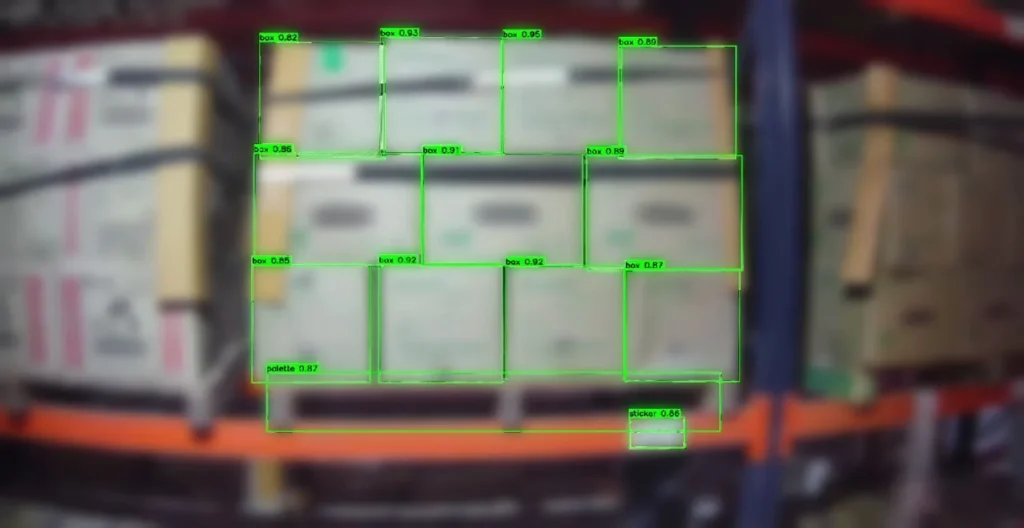
A camera system reads bin labels and counts boxes as it moves along an aisle, so an audit can be repeated often rather than planned as an event. We compare manual counts, aisle camera rigs, forklift cameras, drones and robots in detail in Rack audits: manual count, camera rig, drone or robot?. This article stays with frequency.
How to set rack audit frequency
Start with ABC or velocity classes
Rank SKUs by value moved or pick frequency. The small group of A items that accounts for most value or movement is counted most often, B items less, and C items, the long tail of slow movers, least. Velocity matters as much as value: every pick and putaway is a chance for the record to drift.
Raise the frequency for high-value and high-dispute SKUs
Some items deserve more attention than their class suggests: pilferable goods, look-alike packaging that gets mixed up at putaway, and SKUs that keep turning up in shortage claims. Move them up a class until the counts settle.
Follow client SLAs at 3PL sites
At a third-party warehouse, the client contract often sets the minimum: an inventory accuracy target, a count frequency, or a right to request a count. Treat the SLA as the floor, not the plan: if a client’s bins keep showing variances, count them more often. Our page on warehouse counting for 3PLs covers how count evidence supports client reporting.
Add counts before and after seasonal peaks
Festive-season peaks push more volume through the same racks with more temporary staff. Count fast-moving bins just before the peak and again just after, before errors spread into replenishment and purchasing.
Count after incidents
Some events should trigger an unscheduled count of the affected bins: a failed pick, a short-shipment claim, a WMS migration or master-data change, a re-slotting exercise, damage in an aisle, or a suspected theft.
A frequency guide by situation
Use this as a starting point: if counts in a class keep coming back clean, count less often; if they keep finding errors, count more often.
| Situation | Suggested frequency | Why |
|---|---|---|
| Fast movers in dispute-prone lanes | Weekly | Many transactions and a history of claims. |
| High-value or pilferable SKUs | Weekly to fortnightly | Each missing unit is expensive. |
| Other A-class items | Monthly | Most of the value sits here, so drift should be caught within a month. |
| B-class items | Quarterly | Moderate movement. |
| C-class slow movers | Twice a year or as your audit plan requires | Records drift slowly but still need coverage. |
| 3PL client stock | At least what the SLA sets, more for clients with open variances | The contract is the minimum. |
| Before and after a seasonal peak | One count of fast-moving bins each side | Start the peak with clean records and clear the errors it leaves behind. |
| After an incident or system change | Immediately, for the affected bins | A targeted count is cheaper than tracing the error later. |
| Whole warehouse baseline | Yearly, or when cycle counts cannot cover everything | Confirms the overall position for finance and auditors. |
Write the schedule down and keep the results. Auditors usually want physical verification to follow a documented plan, so agree your approach with them.
What skipping an audit costs: a method
The cost of an audit is easy to see. The cost of not auditing is spread across the operation, so make it visible by adding up five items from your own records for a typical month.
- Inventory record errors. How many bins did your last count find with a different quantity or SKU from the system? This is the root of the other costs.
- Picks that fail. Count the picks where the picker found the bin short, empty or holding the wrong item. Multiply by the cost of searching, re-picking and any late shipment.
- Emergency recounts. Count the unplanned recounts triggered by failed picks, client queries or month-end mismatches and the people-hours each took.
- Write-offs. Add the value of stock written off as lost, plus stock found too late to sell.
- Client claims. Add shortage claims you paid or credited, and the staff time spent disputing them. Claims at dispatch are often a rack problem first; see how to stop shortage and excess disputes at dispatch.
Then compare that monthly total with the cost of adding counts for the bins that cause it.
Illustrative worked example
The figures below are invented round numbers to show the method. They are not Indus Vision results or industry benchmarks.
Suppose a warehouse records, in a typical month, 50 failed picks costing about ₹500 each in search and re-pick time (₹25,000), 10 emergency recounts at about ₹2,500 each (₹25,000), ₹50,000 of write-offs, and 2 client shortage claims averaging ₹25,000 (₹50,000). The cost of the current schedule’s gaps is about ₹1,50,000 a month.
Now suppose an extra weekly cycle count of the fast-moving, dispute-prone bins takes 2 people half a day each week, and a person-day costs ₹1,000. That is about ₹4,000 a month. If the extra counts remove even a small share of the ₹1,50,000, they pay for themselves. Run the same sum with your own numbers.
How camera-based rack audit changes the economics
With manual counting, every extra round costs more labour, so labour limits frequency. Camera-based audits lower the cost of each repeat count, making it practical to count fast movers and dispute-prone bins more often without a larger counting team.
DeepVision Warehouse from Indus Vision takes the aisle camera-rig approach. A rig is moved along the aisle with front and top cameras on both sides, so the left and right racks are covered in one pass. The front view reads the bin label and pallet face; the top view counts boxes across the pallet’s depth. Bin, SKU and box count stream to the dashboard while the rig is still moving.
The bin-to-SKU master goes in as CSV, XLS or XLSX from your WMS or ERP export, so there is no WMS project. An auditor approves, rejects or edits each bin against its images, and the reconciliation downloads as CSV. Every bin keeps the pictures it was counted from. Cameras and processing run on site, so data stays on your network. The same platform also covers dock tally at the loading conveyor.
The weekly and monthly rows in the table become easier to keep, and incident counts can happen the same day. For definitions of the terms used here, see our glossary of warehouse counting terms.
Frequently asked questions
How often should a warehouse do a stock audit?
Most do better with cycle counting than occasional full counts: fast-moving and high-value bins weekly or monthly, middle-velocity items quarterly, slow movers a couple of times a year, plus a yearly baseline if auditors require one.
Is a rack audit the same as a rack inspection?
No. A rack audit, as used here, counts the stock on each bin. A rack inspection checks the racking structure for damage and safety. Its schedule follows the rack manufacturer’s guidance and the applicable safety standard.
What cycle count frequency should I use for A, B and C items?
A common starting point is monthly for A items, quarterly for B items and twice a year for C items, with weekly counts for fast movers that keep causing disputes. Change them when counts show a class drifting faster or slower than expected.
Can camera-based audits replace manual counts completely?
They can take over most routine counting, but people stay in charge. With DeepVision Warehouse an auditor validates each bin against its images, and stock that cameras cannot see, such as items hidden inside closed pallets, may still need a manual check.
We start with one aisle, run alongside your current count and put the two results side by side. Talk to us about a site trial.